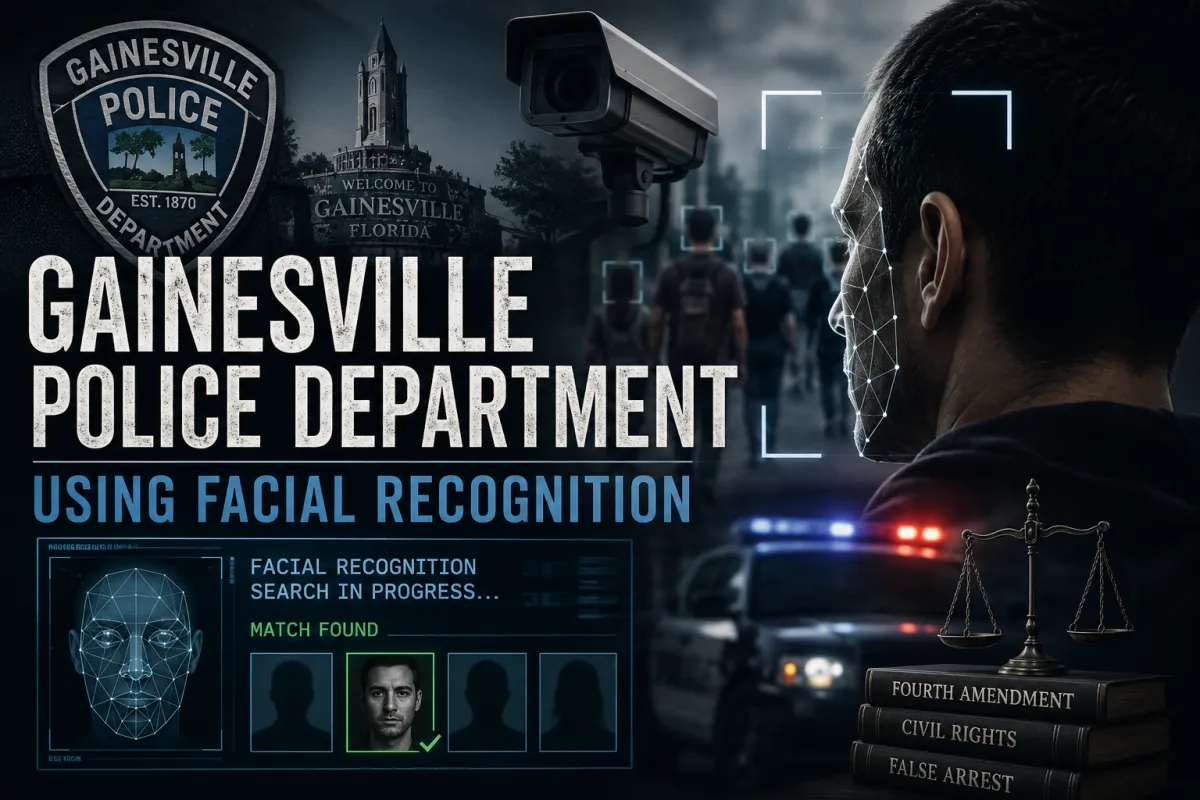
Facial Recognition in Policing: Risks of Wrongful Arrests
Reviewed by Michael P. Maddux, Esq. | Board Certified Criminal Trial Lawyer | Florida Super Lawyer for 16 Consecutive Years
Gainesville Police Department’s use of facial recognition technology highlights the growing reliance of law enforcement agencies on software such as FACESNXT and Clearview AI to generate investigative leads in criminal cases. According to Detective Sgt. Nick Ferrara, GPD has run more than 30,000 facial recognition searches, with approximately one-quarter producing potential investigative matches. Officials emphasize that these matches are not treated as definitive identifications, but rather as one piece of a broader investigation. Still, the technology remains controversial due to concerns about transparency, racial bias, and wrongful arrests. Critics, including public defenders and civil rights advocates, argue that police agencies often fail to disclose when facial recognition tools are used, limiting a defendant’s ability to challenge the evidence against them. Courts have yet to fully address whether facial recognition searches implicate Fourth Amendment protections against unreasonable searches and seizures.
The increasing use of facial recognition technology may have significant implications for false arrest and civil rights litigation. Nationwide, several wrongful arrest cases have already involved mistaken facial recognition identifications, particularly affecting minorities and individuals with darker skin tones. When law enforcement relies too heavily on technology-generated leads without adequate corroboration, innocent individuals may face arrest, detention, and reputational harm based on flawed or incomplete evidence. Additionally, failures to disclose the use of facial recognition tools during investigations could raise constitutional concerns regarding due process and the ability to challenge probable cause. As courts continue to grapple with the legal limits of emerging surveillance technologies, attorneys handling false arrest and Section 1983 claims will likely see increased scrutiny of how facial recognition evidence is obtained, verified, and disclosed by law enforcement agencies. Michael P. Maddux, P.A. specializes in representing individuals in false arrest and civil rights claims. If you believe you were falsely arrested or subjected to unconstitutional police conduct, contact our office to discuss your legal rights and potential remedies.
